About nature
Colors of life.
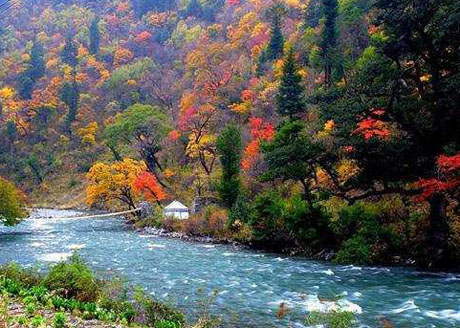
I like spring.
I like spring, but it is too young. I like summer, but it is too proud. So I like best of all autumn, because its leaves
are a little yellow, its tone mellower, its colors richer, and it is tinged a little with sorrow and a premonition of
death. Its golden richness speaks not of the innocence of spring, nor of the power of summer, but of the mellowness and
kindly wisdom of approaching age. It knows the limitations of life and is content. From a knowledge of those limitations
and its richness of experience emerges a symphony of colors, richer than all, its green speaking of life and strength,
its orange speaking of golden content and its purple of resignation and death.
Lin Yutang: 1895-1976
Autumn-Late summer: element metal.
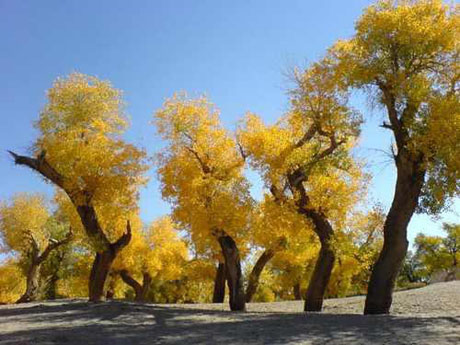
Traditional Chinese Medicine constructed a system based on the Five Phases or seasons of life. Spring, Summer, Late Summer, Fall,
and Winter, each phase has correspondences that are used in Chinese medicine. Qi Gong exercises (lungs) can strengthen Metal Qi,
and herbs (ginger) can be used to enhance or balance the metal element which will lead to balance and health in all aspects of life.
The moon is full, the autumn nights grow longer.
In the north forests startled crows cry out.
Still high overhead, the star river stretches,
The Dipper's handle set to southwest.
The cold cricket grieves deep in the chambers,
Of the notes of sweet birds, none remain.
Then one evening gusts of autumn come,
One who sleeps alone things fondly on thick quilts.
Past loves are a thousand miles farther each day,
Blocked from my drifting and my sinking.
Man's life is not as the grass and trees;
Still the season's changes can stir the heart.
Wei Ying Wu
Drinking alone with the moon.
Li Bai (701-762)
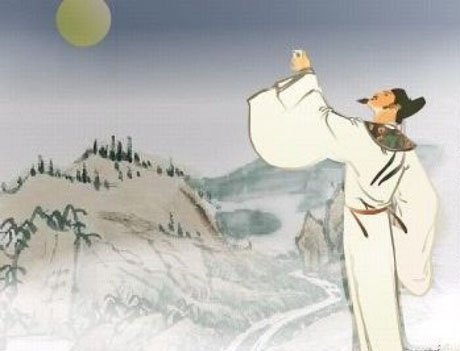
From a pot of wine among the flowers,
I drank alone with no companion.
Raising the cup I asked the bright moon,
Bring me my shadow and make us three.
The moon cannot understand my drinking,
My shadow follows silently where I go.
The moon accompanies temporarily the shadow,
Take the opportunity to have a joyous time.
Moonlight wandering around when I sing,
The shadow floats along when I dance.
Enjoying to be friends while I am awake,
The companionship ends while I am drunk.
Let’s have friendship forever,
We will meet again in the vast sky.
Delft : Holland
.jpg)
Photo : Hugolorent
Genesis 3:19:
"For you were made from dust, and to dust you will return".
We can comprehend if we look at the big picture. Life is only a short journey. Like a passerby, we walk through the earth
towards a clear destination. Taoism upholds the belief that the afterlife is within life itself. Birth is not the beginning,
and death is not the end. Death is a transformation. Like day and night, just one of the 10.000 manifestations of the Tao,
the indivisible and indescribable unifying principle from which all life flows. Lao Tse: "The Way is eternal, The Way
flows everywhere, It fills everything. All things owe their existence to it and it cannot deny any one of them."
Tsjwang Tse (Chuang-Tzu): "The universe is the unity of all things. If one recognizes his identity with this unity, then the
parts of his body mean no more to him than so much dirt, and death and life, end and beginning, disturb his tranquillity no
more than the succession of day and night."
Walker, because I have a little wisdom, I choose to walk. Just walk and play. Have fun, enjoy the walk. Most people prefer
by-paths. This is not in keeping with the Tao. The Way is to act but not to compete. When we compare, we compete.
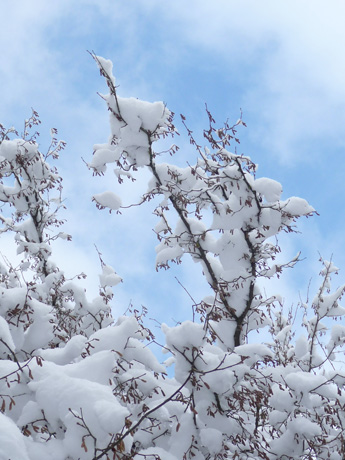
Photo : Alida Hansen
In Taoism the goal of life is to make your heartbeat
match the beat of the universe,
to match your nature with Nature.
Do not understand Nature's way, be part of Nature.
The ancient Taoists sought to connect themselves to Nature's balance and the Universe around them.
In the depth of winter lays an invincible summer. If winter comes, can spring be far behind? After
every storm, there comes clear, open skies.
Tao represents the balance of opposites in the whole universe. A good deal of Taoism is concerned
with balance and oneness. The path to oneness begins with an understanding of the origin of the
universe. The Taoist theory about the origin of the universe remains correct in the light of modern science.
Any fool can understand. Do not understand Nature's way, be part of Nature and match your nature with Nature.
Lao Tse: "Who understands Nature's way becomes all-cherishing; Being all-cherishing he becomes impartial;
Being impartial he becomes magnanimous; Being magnanimous he becomes part of Nature; Being part of Nature
he becomes one with Tao; Being one with Tao he becomes immortal: Though his body will decay, Tao will not."
Lao Tse (Lao Zi)
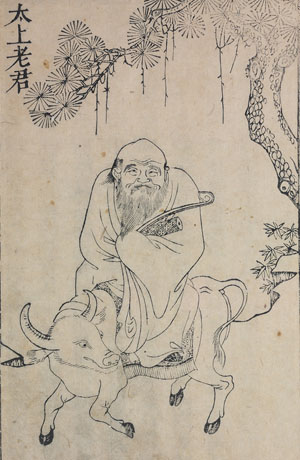
Since the time of Lao Tse Taoists have always followed what is natural.
Today most humans must learn to see themselves as
not separate from nature.
Culture is culture, nature is nature.
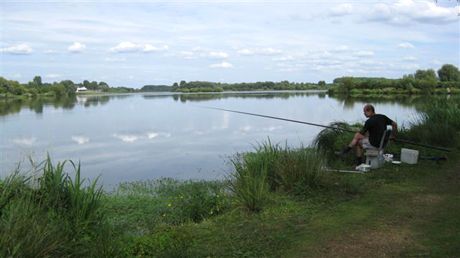
Even on a beautiful day like this nature is not kind.
Nature is moral indifferent,
it treats all things impartially.
Fisherman:
"Even within this beautiful landscape, in the water,
in the trees, in the air,
under the leaves insects, birds and fishes are eating each other".
Violence is a part of life and dead is nature's way of saying
Your table is ready.
Nature is nature. We all belong to nature.
Neanderthalians, Neo-Humeans, Humeans or Necessitarians:
welcome to Planet Earth.
The laws of nature are our natural laws.
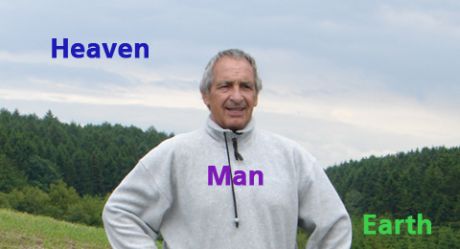
Taoism is the religion of Heaven and Earth.
Man follows the laws (the way) of Earth
Earth follows the laws (the way) of Heaven.
(Tao Te Ching)
The birth of man is at the same time
the birth of his sorrows and his joys.
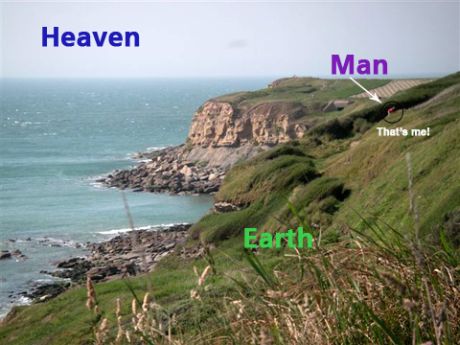
Heaven, Earth, Man:
a more realistic (Taoistic) point of view.
Being not a Taoist, just a 'micro friend' of Tao
Taoists believe that the way of man is to be in accord with nature.
Man must harmonize his true nature with the nature of heaven and earth.
He must harmonize his own microcosmos with the macrocosmos.
Taoists recognized body/mind as one unified energy field within the larger heaven/earth unified energy field.
Heaven-Man-Earth
Before Heaven and Earth came into being, Tao existed by itself from all time.
Heaven is eternal but Earth is everlasting.
Man is contained (immanent) within the boundaries of the Earth.
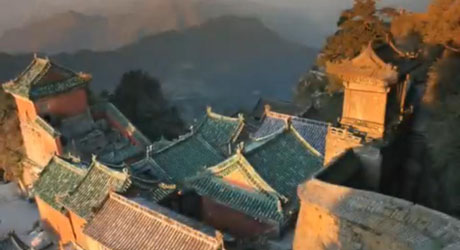
The trinity between Heaven (tian), Earth (di), Human (ren)
describes the unique relationship that Man has within his surroundings.
Heaven was seen as an eternal and an omnipotent entity.
Therefore Man only comes to existence
"after the information of Heaven and Earth".
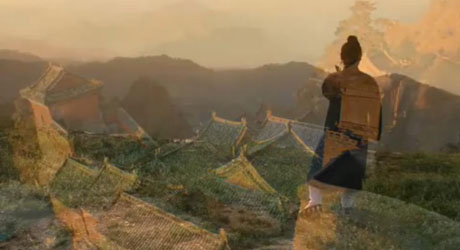
Man is the mediator situated between Heaven and Earth
Man is both, eternal and everlasting at the same time.
He is in compliance to Earth, Earth to Heaven, Heaven to the great Tao.
In some legends animals perform heroic deeds or act as mediators between Heaven and Earth.
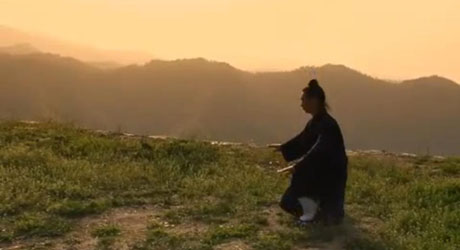
Wudang mountains: Taoist Master of Heaven and Earth.
Man must harmonize his microcosmos with the macrocosmos.
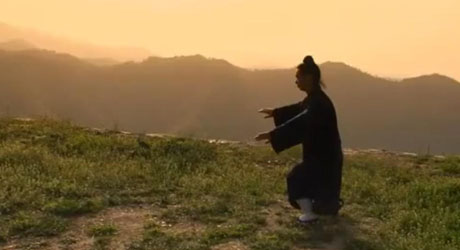
Taoists recognized his body/mind energy field as an
unified energy field within the larger unified energy field of
Heaven and Earth.
Taoism is a Chinese study of the forces and processes that
create, produce and control all the phenomena in nature.
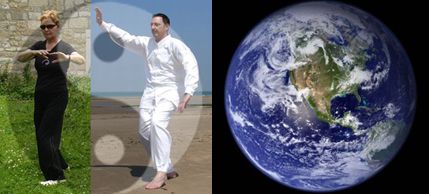
Taoism is a participating study of all the phenomena
in this material world.
Taoism starts and ends with observation of nature. In this way, it is just like science,
but it is different in that science observes nature objectively, separate from the observer,
whereas Taoism observes nature subjectively, seeing the observer and the observed as one
entire system. In such an understanding nature is not something outside of us to be dealt
with after the fashion of a mechanic repairing a car, but is both a mental attitude to be
carefully cultivated and the true condition of one’s body that contains the infinite
dimensions of cosmic reality within itself. This are the principles of the entire natural system:
1 Oneness. There is not "just us," or "just nature," but both.
2 Change or dynamic balance.
3 Cyclical Growth.
4 Harmonious Action.
Animals, plants, air and water are food and medicine as both.
Food is medicine and medicine is food.
Lives of Taoists are not in the lap of the Gods but in the lap of our cooks.
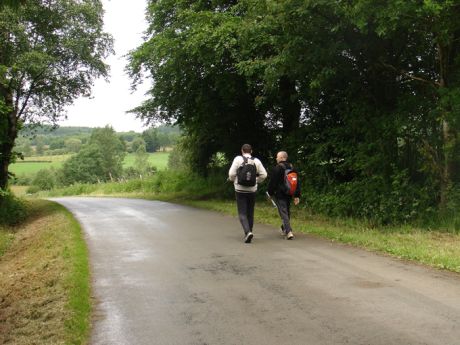
But Taoists also look at the nature in a broader sense,
such as 'spirituality in nature'.
Taoist painters convey the Taoist belief of the primary importance
of nature and of man's small, yet harmonious existence
within this (orderly) universe.
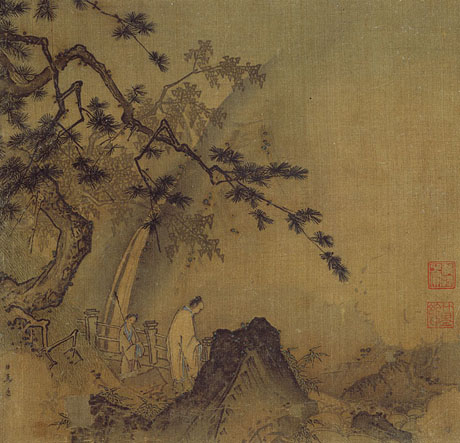
The jagged rhythms of the pine tree contrast with the quiet mood of the scholar,
who gazes pensively into the bubbling rapids of the cascade.
Ecological consciousness is present in Taoist texts through three dominant themes:
1 the role of humanity in cosmic ecology.
2 the spiritual ecology of the bodies’ inner landscape.
3 the problem of human transcendence over nature.
The calligrapher.
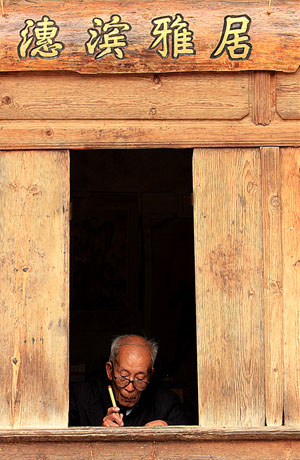
Although
Chinese calligraphy uses Chinese words it is a natural vehicle of expression.
Like Tai Chi It is an abstract art, mysterious, bold yet fluid, playful.
Like in nature, without fixed directions.
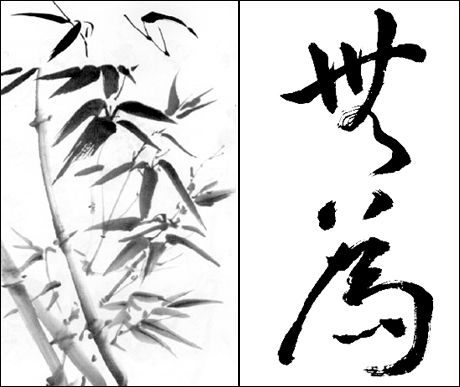
The contrasts with the empty unpainted areas are visual references to
the flow of the opposing forces of yin and yang.
They refer to the contrasts 'full/empty, dry/wet, dark/ light, small/ large'
young/ old, warm/ cold, soft/ hard,
the begin/ the end, open/ close
found in nature.
Contrasts found in Nature:
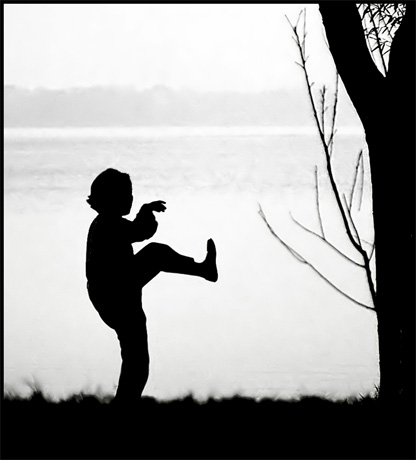
Tai Chi shadow boxing.
Light-Yang & Shadow-Yin
Tai Chi Chuan is a nature-based martial art which refers to contrasts found in
nature. Looking like a cross between shadow boxing and slow-motion dance, thought
taking shape in ritual and stylized gesture the whole body transformed into a form,
a universal dance, emptiness in motion,
silence in action,
shadows and light...etc...
Yin and Yang.
Tai Chi represents duality. It's main principles are that of emptiness and fullness.
Wu Chi (nothing - ness) gave birth to its opposite (something - ness), what means that Wu Chi
gave birth to Tai Chi. Tai Chi divided itself into Yin (shadow)
and Yang (light) duality,
which symbolizes the two complimentary yet opposing Yin-Yang aspects of deeper reality.
Tai Chi is often associated with the concept of Yin-Yang in motion, the notion that one can
see a dynamic duality
(male/female,
heaven/earth,
active/passive,
light/shadow,
forceful/yielding, etc.) in all things.
It is said that Nature is empty in essence. So emptiness (wu chi) is the essence of the Tao,
it's the essence of Tai Chi Chuan.
Yi Chuan Classics : "Your body has a feeling of emptiness described as transparent. Like clear water
that you can see through to the bottom of the stream, you are transparent with your connection to
nature. The river is clear and the water is peaceful. No physical and no thinking, all must be
natural, no intention. The mind must not be focused to accomplish something. There is no present intention for
doing, you must feel natural and relaxed. Through quieting of mind and stillness of the body you
reach a point where you loose awareness of the body and the mind and you become connected to
nature and the universe."
Keep in touch with nature.
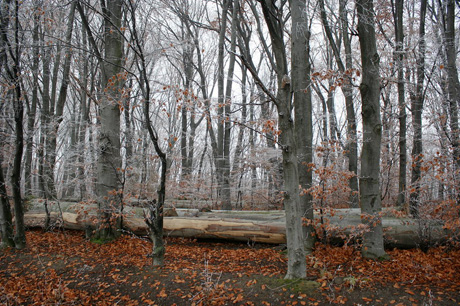
Taoism is a nature-based Heaven and Earth philosophy.
In general Taoism results in a balanced relationship between human beings and nature. Taoism aims to enhance
vitality by living in accord with nature's shifting balance.
Nature explains itself. It is said that nature is empty in essence. Wu Chi (emptiness) represents the
fusion (the mother) of Yin and Yang, represented by the
taijitu symbol. Emptiness is the nature of the universe.
Lao Tse: "While something and nothing do produce each other, it’s the emptiness of nothing that is fundamental.
Thus what we gain is Something, yet it is by virtue of Nothing that this can be put to use." This is all the more
important because most of us are pulled towards the somethings as having the most significance.
The Tao is the One.
From the One comes yin and yang.
From these two, creative energy (chi).
From chi, ten thousand things, The forms of all creation.
All life embodies yin and embraces yang,
through their union achieving harmony.
Tao Te Tsjing Chapter 42
According to a statement, which is found in the Book of Changes, "One Yin and One Yang, this is the Tao (Dao)",
this sentence refers to the Tao that first determines itself as Oneness and then through the One gives birth to
the two complementary principles found in nature, Yin and Yang. That way Taoism becomes the 'Way of Heaven and Earth".
The Way of Heaven and Earth.
One Yin one Yang.
One Heaven One Earth.
Taoism leaves nature unexplained by arguing that
the universe explains itself.
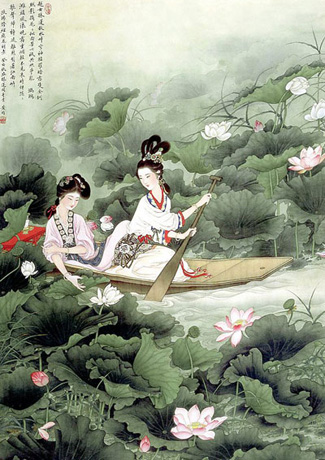
Nature explains itself
.
Thus, it does not need to be interpreted, since it explains itself.
Nourished by the five thousand years of history, ancient Chinese had formed distinctive viewpoints about the
feminine beauty. There is a Yin-Yang standard of Chinese beauty :"Be beautiful without (out) and intelligent
within (in)". That is to say, If you fail to understand the natural concept of natural beauty you would have
missed the essence.
As you can see there is no need for temples; nor is there a need for complicated philosophy. But If you fail
to understand the natural concept, you would have missed the essence of Tai Chi Chuan. Better take a walk.
Nature explains itself.
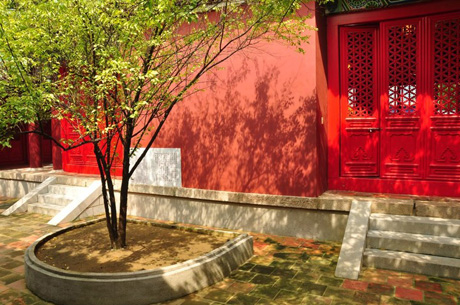
Light, shades, colors
Found in nature.
This is one of the beautiful features of Chinese culture, It makes philosophical poetry out of the fighting arts
and the healing arts. Whereas Tai Chi Chuan is a martial art, the concept of Tai Chi is found in many Chinese
disciplines, such as in Taoism, philosophy, metaphysics, healing, relations, spirituality, feng shui (the Chinese
science of environmental energy) and military strategy, arts, calligraphy, garden design...
Chinese culture is known as "divinely inspired," and over a continuous recorded history of 5.000 years! In world
history such a coherent world-view, such a holistic framework is unique.
And again: the underlying principle is Yin and Yang found in nature. Tai Chi Chuan, in a universal context,
refers to the framework within which the dualities of Yin and Yang manifest themselves in the field of time and space.
If you fail to understand the concept you would have missed the essence of the art.
Brush painting.
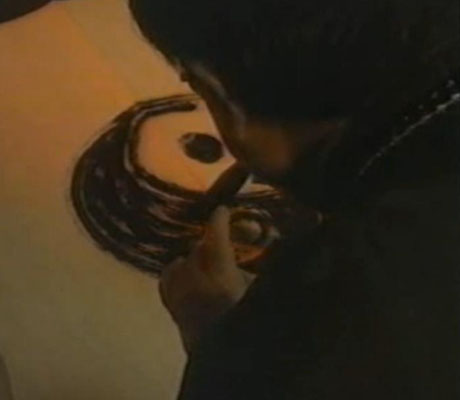
Tai Chi Chuan is called "the supreme ultimate".
All of the traditional Chinese arts,
such as brush painting, calligraphy, literature,
poetry, cooking, feng shui
and all of Chinese fighting arts emphasized
the Yin/ Yang contrasts found in nature as the means of
reaching the supreme ultimate.
Nature is silence in motion.
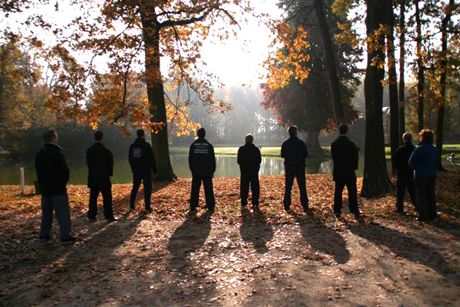
Tai Chi is silence in motion, it refers to the contrasts
full/empty ,dark/light, small/large, soft/hard,
the begin/the end, open/close found in nature
In Heaven as on Earth.
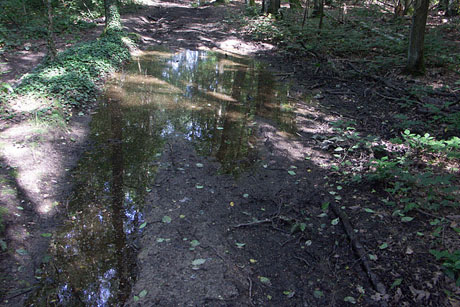
Photo : Hugolorent
Heaven on Earth.
Heaven on Earth is a choice we must make,
not a place we must find.
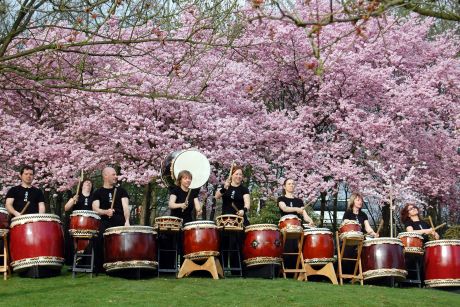
Traditional taiko in a Japanese Garden (Hasselt- Belgium).
(Feniks Taiko)
China: Tongli garden.
Music is all around us. We only have to listen.
Music is an inter-medium between physical and non-physical things.
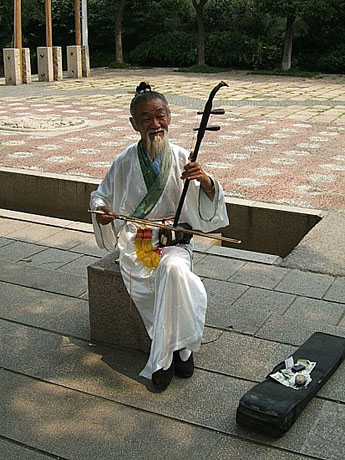
Music is a link between non-material and material things.
The sound of music is a link between things of Heaven (shen) and Earth (jing).
Enjoy it.
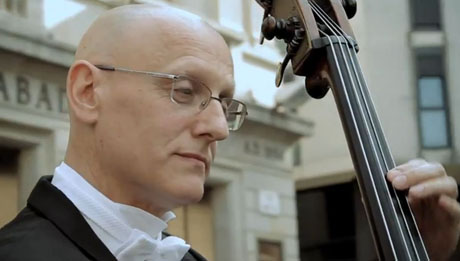
Indulge yourself : Link to YouTube
“Jingshen”.
It is where Heaven and Earth come together.
Heaven meets Earth.
Heaven and Earth are designed not to be separated but to come together.
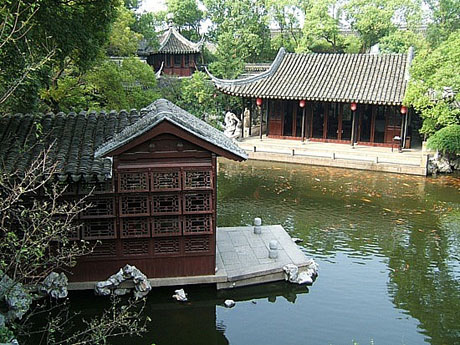
Jingshen:
Using the serenity of calming water
Chinese gardens are metaphors for the harmony (unity) between
Earth-Man-Heaven.
Chinese gardens refer to the five elements
and to all the contrasts found in nature.
Chinese gardens are views of nature
change with the rhythm of the seasons
They refer to the relationship between heaven and earth.
They refer to man's small yet harmonious existence
within this orderly universe.
JINGSHEN
A human being is seen as a garden in miniature, a microcosmos within the macrocomos. Garden design has a long tradition.
China is known for the age-old art of planning painterly gardens which look like their (3-dimentional) paintings. Using the
serenity of calming water, traditional Chinese gardens are metaphors for the harmony between Heaven, Man and Earth.
Within Chinese cosmology, all of creation is born from the mariage of two polar principles : Yin and Yang. Heaven and Earth,
land and water, wet and dry, cold and hot, inner and outer, night and day are born from the marriage between Yin and Yang.
Harmony of this union means good health, good fortune, while disharmony leads to disease and disaster. The strategy of all
Chinese arts is to recover and sustain the balance between Heaven and Earth, to restore harmony and to adjust Yin-Yang
harmony between wet and dry, cold and warm, inner and outer, light and shadow, shadow and reflection. Each tree is a cosmic
axis that connect Heaven and Earth (the same thing is happening to our spinal column).
The wrestling match between man and nature
The wrestling match between man and nature is the old story of 'man against nature'. At Versailles Louis XIV, the Sun King,
created a perfectly trimmed, geometric garden to show his control not simply over his subjects but over nature itself.
Versailles sets the standard with its rigidly linear cartesian perspectives, baroque fountains and cherubs. Western
cartesian thinking leads to the note that nature, which owes its beauty to the Gods, is subjected to improvements and
arrangements at the hand of mortals. Nature must distrust caprices of the human mind expressed by the concept of culture.
We should remember that the term "natural environment" covers in large measure an artificial environment described as
natural, but shaped and tranformed by the hand of man. Renaissance artists used the Golden Spiral to determine proportion
in gardens, even the proportion of land to sky in landscapes and gardens was figured using the Golden Ratio (rectangle
1 to 1,16803). The beautiful proportions of the Golden Ratio are still used today. Even then, Western gardens are
"an enclosure, a rational set aside and cut from the real world of the Tao", they are a human construction in which the
human ratio can shape an own environment. The word 'garden' has an Indio-European root : (ghorto-grad) meaning an enclosure,
a set aside and cut from natural world. Western gardens are described as nature, but shaped by man's imagination.
The European landscape garden is associated with nature's freshness, with 'green grass' from the tradition of the shephard,
the Chinese associate their grass steppes with wildernis which threatens their great civilisation. So, European parks and
landscape gardens are "good for cows and shephards but not suitable for man's intellect", they are "chiken soup for the soul,
nuggets for the brain".
Jingshen and Tai Chi Chuan
Feng shui is the art related to "the law and order of nature and the power of the universe". In Beijing the famous
"Heaven and Earth in one vessel" represents the Chinese perception of the whole Universe. Earth-Man-Heaven, there is a
fusion of spirit and substance which the Chinese call 'Jingshen'. Western gardens "lost their Yingshen". Yingshen means
different things in different contexts, it's a difficult term to translate. It conveys man's dual nature : part Earth
(part animal), part Heaven (part spirit). In this context Earth (body) and Heaven (spirit) come together, body and spirit
become together one. The shen (upper chakra) constitutes our capacity for consious awareness, and the Jing (lower chakra)
constitutes the depth of our awareness. Jingshen illuminates our depths and draws out potential so that it may become
manifest in the world. The act of willing the interpretation of jingshen is a methaphor for introspection and self discovery,
practicing Tai Chi Chuan an understanding of the concept of jingshen will help you. There is only one jingshen but there
are many emotions, so, let it be, let it go, a strong jingshen is free of emotions. The mind must be empty, there is a
direct relationship between the concept of yi (the mind intent) and yingshen. The mind intent (yi) always comes from
jingshen. Therefore when practicing Tai Chi Chuan the spine should be hold vertically, it creates a strong and solid
reunion between Heaven and Earth, it creates your jingshen.
This pavilion is situated between Heaven and Earth.
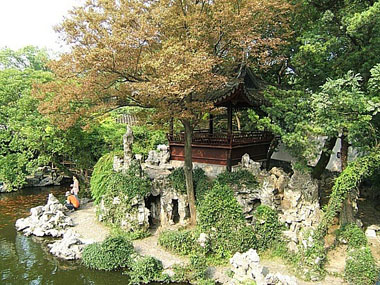
Man in the middle is the missing link between Heaven and Earth.
Man in the middle seeks harmony with Heaven and Earth.
Man in the middle follows “the Middle Way”.
Jingshen : Water in contact with air allows the qi to move from Earth to Heaven. Using the serenity of calming water garden
pavilions are mostly designed for contemplation and introspection.
A strong yinshen comes from contemplation and introspection. From ancient times to today, Chinese pavilions have been
associated with parks or gardens, in China there is no famous mountain without a pavilion, no rivers or lakes without
pavilions, and no parks or gardens without pavilions. Garden pavilions are mostly designed for contemplation and
introspection, a pavilion encourages meditation and the deeper awakening of the jingshen. A pavilion is designed for deeper
knowing, maybe you can read a book, "a book is like a garden carried in your pocket". Bamboo, one of the four favorite
plants along with plum, orchid and chrysantum -"the four man of honor"- was used in traditional Chinese garden. Empty
bamboo, as the plant is, as the heart is, so too we are capable of being "empty vessels where the vital life forces from
Heaven and Earth unite and converge". It could be a good definition of 'Jingshen'. Practicing Tai Chi Chuan without an
understanding of jingshen, without the reunion of jing and shen, Tai Chi turns into "chicken soup for the soul". Nuggets
for the brain, better take a walk.
"In ordinary life we are not aware of the unity of all things
but
divide the world into separate things, objects and events.
To believe that our abstract concepts of separate things
are realities of nature is an illusion".
Fritjof Capra
Taoism should be understood as "being".
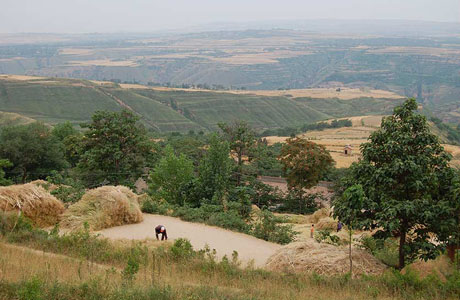
Taoists focus on living a simple and balanced life
in harmony with nature.
It starts by teaching that "The Tao" is indefinable.
The life we live today is a total different one. A teaching like this
is very hard to grasp when most of us desire very concrete definitions
in their own life. Taoism is hard to grasp when most of us are living
a hectic and complex life. Each of us knows that we do not need all
the things we think, but the question is how to stop our obsessive and
possessive thoughts ?
That's the question. And the answer is : just do it.
Do you start things you never finished?
The story of nature is never finished.
It is always at an interesting point continued in the next.
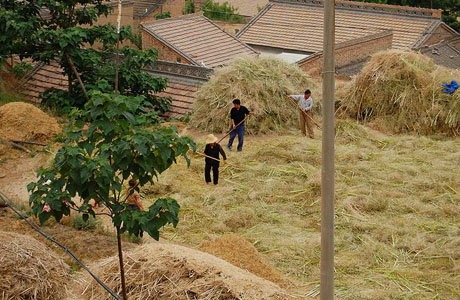
Tai Chi Chuan is never finished.
It is always at an interesting point continued in the next.
Life is not complex, we are complex.
Life is simple, and the simple thing is the right thing.
Oscar Wilde.
The Taoist would say :
"Life is not complex, but the simple things are the difficult things.
Be yourself and learn to cook. Eat when you're hungry and get enough
sleep every night. Don't try to please everyone and be sure to pay your
bills on time. Make mistakes. Life is not complex, stay out of other
people's life soap and don't needlessly create your own."
Tai Chi Chuan is not complex, we are complex.
Tai Chi Chuan is simple, and the simple thing is the difficult thing.
Tai Chi Chuan is difficult, not complex.
The Taoist would say:
"Learn and practice the form, every day. Make mistakes, every day.
Learn from your mistakes, every day".
Let us permit nature to have her way. She understands her business better than we do.
Michel Eyquen de Montaigne
The further we move from the way of nature to solve today's problems
the more likely today's solution becomes tomorrow's problem.
Until you value yourself as a part of nature,
you will not value Tai Chi Chuan.
Until you value Tai Chi Chuan,
you will not do anything with it.
 Western philosophers: About nature.
Nature understands her business better than we do.
The bees pillage the flowers here and there but they make honey of them witch is all their own.
It is no longer thyme or marjoram.
Michel Eyquen de Montaigne
Taoist classics: about nature.
Nature is not kind
It treats all things impartially.
The sage is not kind
And treats all people impartially.
Lao Tse
Nature is complete because it does not serve itself
The sage places himself after and founds himself before
Ignores his desire and founds himself content
He is complete because he does not serve himself.
Lao Tse
Taoist classics: about nature.
Nature says only a few words
High wind does not last long
Nor does heavy rain.
If nature's words do not last
Why should those of man?
Lao Tse
We live only to discover beauty.
All else is a form of waiting.
(K. Gibran)
ABOUT TAOISM, MARTIAL ARTS AND MORALITY
"What is good and what is bad and need we someone to tell us such things?"
Some students ask : "Why all those martial applications ?"
"What we need is love and peace,
morality, rules of conduct...etc".
In Taoism morality is a non existent problem.
Taoism does not see things in terms of moral significance, in terms of good or bad. Issues of
morality and rules of behaviour are not part
of Taoism because nature is moral indifferent. Tao always moves towards opposites, good and bad
always to each other.
Taoists preach simple solutions for serious moral problems.
Yin and Yang move always to each other and that's the only theory by which Taoists solve their
moral problems.
Unlike in Western tradition, human conduct is not isolated and separated from nature, but is fully
located in a larger context of the cosmic flow of Tao. From a Taoistic point of view obeying the
way of Tao is the key factor in the creation of a fully conscious person. It raises that person
above itself into an identity driven by desires to a conscious human being in the fullest sense.
A UOMO UNIVERSALIS.
That way Taoism becomes a mystical path, the way of Tao is found within ourselves. Finally Tao becomes
the way of spontaneity of all things. The relation between 'Te' and 'Tao' is the same as that between
the river and the water. All water flows to the sea, because all things tend to go in one direction.
Taoists call it "The Will of Heaven" and "wise men understand the Will of Heaven". Obeying The Will
of Heaven is a safeguard, it serves as an ultimate control over things commonly aliated with luck.
All water flows to the sea, the whole universe is a living system that is creative in nature and the
energy of life (chi) is always oriented towards organization. Well then : as the collective sense of
what is truly significant grows, the ability to take right action in the right moment expands.
Taoists begin by PURIFYING themselves. Ultimately Taoistic version of morality comes down to two
central concerns: CONTROL and CONSCIOUSNESS. Problems of control and consciousness become clear when
practicing the martial aspects of Tai Chi Chuan. That's the first reason why the martial aspects of
Tai Chi Chuan are this important. However morally correct we may practice our martial applications,
there are always circumstances in which a Tai Chi student has no control over what may seriously
influence the outcome of his or her actions. Control means not only control over one's actions but
also control over the situations we will encounter. Control means control over the circumstances as
well as over the outcome of our actions.
"Misfortune tell us what fortune is" (Chinese proverb). Taoist think that a serious person will always
step into lucky circumstances. Whom fails to follow the Way of Tao, will be haunted by bad luck.
Taoists avoid moralizing by preaching simple solutions for serious moral problems, Taoism preaches
that the universe is a living system that is creative in nature and life's energy is oriented to
organization.
Taoism preaches that if the collective sense of what is truly significant grows, the ability to take
right action in the right moment expands. Taoism tends to a philosophical approach of responsibility,
while ethical issues are linked with Confucianism. Discusses of morality and rules of conduct are not
part of Taoism. Taoists do not see things in terms of good or bad, right or wrong, left or right.
They see things in terms of responsibility. "If you have always done it that way, it is probably wrong ?"
Taoism is a model for authentic development and morality is a non existent problem.
The misunderstanding of our time is that insight will work with people who are unmotivated to challenge. That morality will work with people who are unmotivated to change. People don’t resist changes.
People resist being changed.